
Our Jewish roots are linked to Bible history and it is impossible to escape our Jewish foundations, because they are tied to the Jewish Messiah. I would add a thought to Mary Pipher’s quote above: if the Church does not know her history, then she does not know the spiritual family to which she belongs. Who then is she? Today’s Church needs a revelation of her bridegroom’s family.
Throughout history, the Church, like the story we are about to study, speaks of rejection, betrayal and reconciliation. It is a perfect portrait of Yeshua and His People as well as the Church and Israel. Sit back and thoughtfully review the beautiful imagery that has been drawn for us by a Heavenly pen held by the Hand of God. No other story in Scripture illustrates as fully the life and work of the Messiah who wrought salvation for those who would believe. He went down into humiliation as the way to exaltation; forgave those who thought they had gotten rid of Him, and came to the aid of those who were perishing. The story of Joseph’s life foreshadowing the life of Yeshua is in no way a theological typology comparable with Supersessionism. This theory in Christian history was most influential in the High Middle Ages and is still common in the Eastern Orthodox churches. This illustration (or allegorical symbiology) is more of a portrait of the likeness between two Biblical figures. It is not to take away from the Hebrew Scriptures the power of God that was at work in the life of Joseph or Yeshua. Joseph’s story is a true story of deliverance, and should be seen as an illustration of the prophesied future world Deliverer.
It was nearing the time when famine struck Egypt. Being a very dry region, there was plenty of pasture for flocks and herds of sheep, goats and cattle. Caring for sheep was an important task for 17-year-old Joseph. Being Rachel’s firstborn and Israel’s eleventh son, he still was the youngest. He was most likely told what to do and how to do it by his older brothers. Right away we see a special relationship between the father and the son. Jacob loved Joseph more than all his sons (Genesis 37:3). The Lord God of Israel said, “This is my Beloved Son...” (Matthew 3:17). Joseph brought a critical report to his father about his brothers. Likewise, Yeshua in several discussions with His brothers brought before them the issue of their sin. Both Joseph and Yeshua’s words elicited strong reactions.
One can only imagine that when the “long coat of many colors” was given to Joseph, it was a sign to his brothers that Jacob intended to pass them by and make Joseph his heir. It caused jealousy to rise to the surface of their hearts and they plotted his demise. Who did he think he was anyway? The family bowing down to him? Taking the coat from him (as Jesus’ robe was taken from Him), from then on, they hated him. Jesus received the same response from the religious… “they hated me without a cause” (John 15:25).
Prophetic Dreams
Joseph was blessed by prophetic dreams–dreams that elicited jealousy. TheEgyptians of that time put so much emphasis on dreams that they had “dream manuals” to help them interpret their dreams but Joseph depended upon God for his. In Genesis 37:12-17 Joseph’s father sent him to his brothers to check on them while they were tending sheep in Shechem. Yeshua also said “I have been sent (by My Father) to the lost sheep of the House of Israel (Matthew 15:24).
When his brothers saw him coming in Dothan, they said “here comes that dreamer”…mocked him and plotted to kill their brother. In the same way in Matthew 27:41-42 the chief priests with the scribes and elders mocked Yeshua. As Reuben rose to Joseph’s defense (Genesis 37:21), Nicodemus came to Yeshua’s defense (John 7:51). The brothers conspired to cast Joseph into a pit or large hole in the ground, most likely a dried up cistern. They then sat down and ate a meal but surely could hear his cries from below. We know it was God who brought Joseph out of the pit. The New Testament tells us that on the third day after the crucifixion, God raised up Jesus from the dead and brought Him forth out of the grave (or pit). The hatred for Joseph had gone so deep that his brothers betrayed him and sold him to the Gentiles. When they did that, he no longer lived in his Jewish world, but entered into a non-Jewish environment. Jesus was also betrayed and delivered over to Pilate who gave Jesus over to the Roman government.
I find it interesting that the Midrash (commentary on the Hebrew Scriptures) tells us that the selling of Joseph was part of God’s Divine plan behind the scenes for him to save the tribes…it got them into Egypt. God also had a Divine plan for the life of Yeshua to save many lives which we’ll cover later on in the story. Maimonides (a Jewish scholar) comments that even the villager in Shechem, when Joseph inquired about his brother’s whereabouts, was a “divine messenger” working behind the scenes.
When Jesus was arrested and imprisoned it was at the time of the Passover when Israel was getting ready to sit down to eat the Seder meal. Judah suggested selling Joseph for money and we remember also that Judas turned Jesus over to the Romans for money. Joseph was sold to the Ishmaelites for 20 pieces of silver and Jesus was sold for 30 pieces. In Genesis 37:32-35 we learn that the brothers reported Joseph dead. Joseph would remain that way to his people until a later revelation. Jesus has been considered dead and separated from His People for 2000 years. As Joseph ended up in the house of Potiphar, an Egyptian, he took on a different appearance. He became disguised so to speak, and his real identity was hidden from that point on, hidden and concealed. He appears clean shaven, without his beard and dressed according to Egyptian fashion with a gold chain about his neck as a reward for his services.
Cast into Prison
After the 1st century and definitely by the end of the 2nd and 3rd centuries, Jesus was depicted as “King of the Gentiles” and yet above His cross was written “King of the Jews.” He was portrayed in ways that helped mask Him from His own people. Sometimes depicted in paintings, He was surrounded by metallic crucifixes, looking like a gentile god with blue eyes and blond hair. His real identity as a Jew was hidden. After 13 years as a slave, Joseph had become Governor of Egypt. He accomplished a lot of good works before his arrest; likewise, Yeshua, before His arrest did many good works. As Potiphar’s wife allowed the devil to tempt her to entice Joseph, the devil also tried to tempt Jesus, but Jesus resisted him on every point. Potiphar’s wife made a false claim against Joseph by charging that he tried to rape her. Thus he was cast into prison. Joseph had not wanted to abuse his Master’s trust, so he resisted her. His father Jacob had taught him well. It is interesting that Potiphar sent Joseph to jail instead of executing him on the spot. One commentary explains that she had accused other servants of the same immoral act before. Jesus was also falsely accused and taken to a holding place before his trial.
Reading in Genesis 40:1-22 the account of the butler and the baker’s dreams are interpreted by Joseph—the butler was saved from death through Joseph—but he forgot he had been in prison with Joseph and left him imprisoned. Likewise, Simon Peter denied Jesus three times and left him abandoned.
When Joseph became the Vizier of Egypt, people “bowed the knee.” When King Yeshua reigns, all the earth will also bow. A further point: Joseph received a new name in the Egyptian gentile world. Jesus received a new name also. His real name which God gave to Him was Yeshua. It was first translated into “Iesous” in Greek and then it became “Jesus” in English. To some degree, the name lost the original meaning of SALVATION. (Matthew 1:21). Of course it is fine to call Him Jesus…but do not be afraid to call Him by His real name; it is beautiful and so meaningful…the power behind the name is important.
Joseph became a high ranking government officer, appointed second-in-command (Genesis 41:41). Yeshua was 30 when He began his public ministry (Luke 3:23) and became an established Rabbi. In Genesis 41:50-52 two sons were born to Joseph, Menashe and Ephraim, later to become half-tribes numbering among the 12 tribes. Jesus chose 12 intimate disciples according to the number of the tribes of Israel (Matthew 10:1-4).
As Joseph saved many Egyptians from starving for lack of bread, among Yeshua’s miracles was the account of the 5000 loaves that fed many people. Genesis 42:8 says, “And Joseph knew his brethren, but they knew him not.” Yeshua’s identity would be hidden from Israel, yet they would be known of Him, as written in John 4:19. Back to the brothers: at one point the brothers spoke about their predicament and thought maybe God was punishing them for what they had done to Joseph, but still didn’t recognize him. Many in Israel today are writing about Jesus in one way or another, as they search, but for the most part they have not recognized Him as the Promised Messiah.
In Genesis 42:23-24 we see a family reunion forming. We know that Joseph wept upon hearing his brother’s conversations between themselves. In Luke 19:41-44 Yeshua wept over Jerusalem and His brethren who did not know Him. Genesis 43:1-7 reveals that Joseph told his brethren, “You shall not see my face, except your brother be with you.” He would eventually gather all of his brothers together while his identity was still unknown. Today God is gathering Jewish people from all over the world and more will be coming in a greater aliyah. It will be when they are gathered in a great number that the revelation will come. As the elderly father called for God’s mercy in the family situation they faced, Joseph became an instrument of mercy. Romans 11:32 says “For God has concluded them all in unbelief, that He might have mercy upon all.”
Genesis 43:15-16 tells how the brothers appeared before Joseph, again, a second time. He commanded: “Bring these men home…they shall dine with me at noon.” Yeshua also dined with his brethren at the Passover meal (Luke 22:15) before He suffered. As Joseph fed his brothers, we know that Yeshua said “I am the bread of life…” and feeds His Sheep (John 6:35). We also read that Joseph’s brothers were afraid as they very carefully walked into Joseph’s house. They were most likely experiencing guilt because of what they knew they had done twenty years before. Likewise, a similar scene comes forth in Zechariah 12:10-13:1.
He Wept
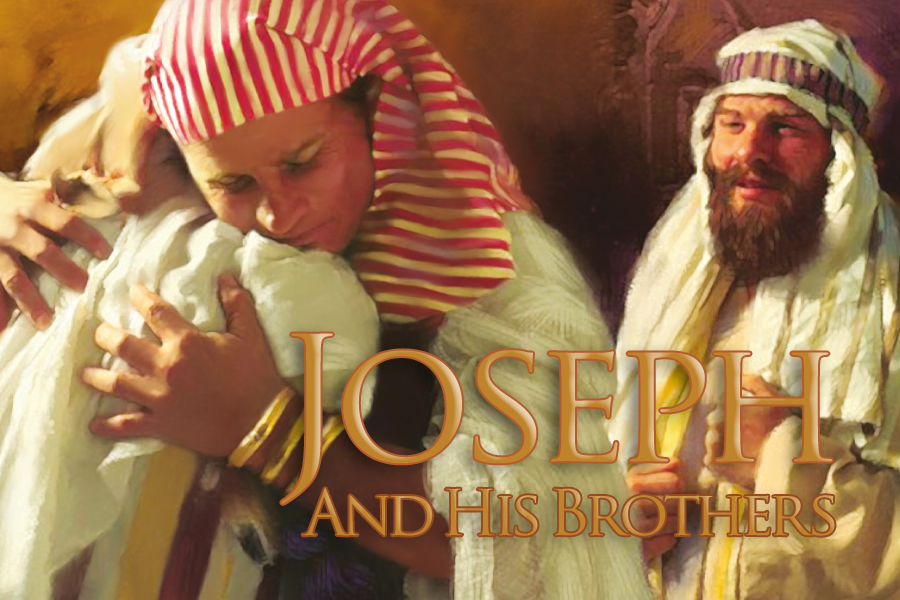
By the time we get to Genesis 43:30-31, we witness Joseph’s deeply intense feelings for his brothers and behind the tears was still a hidden identity. Yeshua wept over Jerusalem because his brothers (or people) could also not see who He was. The brothers were then fed and departed. Joseph provided them with supplies and unknown to them, returned their money. By Genesis 44:13-34 the sons of Israel had torn their garments because of their worst fears. It was Judah’s broken-hearted confession that finally broke the ice as tears came. Joseph could no longer contain his emotions and he cries out loud.
There will come a time in the near future when Yeshua will wait no longer but will be given the command by His Father to return, with a shout! Of course, the Egyptians in the household heard Joseph and I’m sure looked at each other with puzzled faces…what was happening? Joseph sent all the non-Jews out. I’m sure it was because it was a family matter, and Joseph wanted to reveal his true identity to his brothers in a private way most likely speaking to them for the first time in Hebrew. When Yeshua reveals His true identity, I believe the Gentile “Christ” will be gone and we will “see Him as He is”…the Jewish Messiah standing in front of everyone. In Genesis 45:3 he then revealed his identity and asked a question: “I am Joseph, does my father yet live?” Everyone was speechless! They were probably also breathless and could not find the words to quickly answer. Will they not also be breathless when they “look upon me” and mourn? (Zechariah 12:10-11).
As the tribes of Israel shall mourn (Zechariah 12) husbands and wives will not be able to look into each other’s eyes, or speak, as they look at their Messiah. Joseph called his brothers to come close and then closer…they must have started to cry because he tenderly beckoned them toward him and said “don’t blame yourselves, it was all the work of God” for the salvation of many lives. The veil was finally lifting and all of a sudden, they saw who He was! The parallel here is of course with Yeshua’s work on the Cross, countless non-Jewish lives have been saved through the Gospel and have come into the Commonwealth of Israel through Him (Ephesians 2:12). This becomes a clear picture of how the Lord may reveal Himself to the family He loves so much.
Oh how they must have missed one another after such a long time. I remember well when my sister and I were apart for so many years and right before her passing from cancer a year ago, I arrived at her door, her arms were open to me and we wept on one another’s shoulders as it had been such a long time since we had been together. It was so healing to both of us.
The Revealing
Multitudes had received Yeshua when He had walked the Land before His crucifixion…and although gone so long…He is coming back. When Joseph revealed his secret “the fame thereof was heard in Pharaoh’s house.” When Yeshua comes, all the world shall know! Joseph assures his brothers that it had all been the outworking of God’s plan. After centuries of rejecting Him, He tells them not to blame themselves. They are saying “How could we have missed it?” But He comforts them and tells his brothers to go tell his father. The embracing of their brother must have gone on for a long, long time as they had “found one another again.” As mentioned, according to the prophet Zechariah, in chapter 12, repentance comes (when Israel mourns) at the Coming of Messiah, and the same joy will be found in Israel at the revelation of their brother. As Israel (Jacob) heard the news his spirit was revived within him–life returned to him. Paul tells us regarding Israel’s return and their future relationship with the Messiah, that it will be like “life from the dead” (Romans 11:15). Joseph lived to the age of 110, living to see his great-grandchildren. Before he died, he made the children swear that when they left the land of Egypt they would take his bones with them back to Israel’s land. Likewise, the Second Coming of Yeshua will bring Him back to the Land.
My Eyes Have Seen Your Salvation
Finally, as Jacob said to Joseph, now “…let me die, because I have seen your face, because you are yet alive…”(Genesis 46:30) we remember dear Simeon in the Temple at the time of the presentation of Yeshua (Luke 2:28-32). He took the baby in his arms and said, “Lord, let now your servant depart in peace according to your word, for my eyes have seen your salvation (Yeshua).” This beautiful portrait was given as a foreshadowing of the wonderful revelation that will come to the Land of Israel.
When the 144,000 of the twelve tribes of Israel embrace this revelation, the Scriptures will be taught as never before. Even the greatest of gentile evangelists may not be able to hold a candle to what is coming. As the Jewish people return from all the nations of the world and have all languages under their belts, they will be able to teach the nations in many tongues and languages. The Jewish Scriptures that prophesied the Coming Messiah will be opened as never before to Jew and Gentile, and they will most likely outshine the original disciples who went to the world the first time teaching of righteousness just like their Master. Just remember, Israel will not become a “Christian” nation and join the “Church” but revelation will come as to the identity of their Messiah, and they will be grafted into “their own olive tree” (Romans 11:24).
Yes, I too, like Mary Pipher, think our history is linked to identity and just as the Church commited the unrighteous act of throwing their Jewish brothers into a pit of hatred, boasting against them, and spiritual pride, it must be revealed (to the Church) that not only was this wrong in the eyes of God, but that the Church’seyes also need opening. If we are part of the Bride, shouldn’t we be getting to know the Groom’s family? If we do not, when we see Him “as He is”—we may not recognize Him. It is good to be part of a love story that is unfolding and beginning to be understood by Israel and the Church. Let’s remember there is still an appointed time for all for an upcoming final meeting.
-Sharon Sanders-